

A Father’s Diary, a Daughter’s Gift
On Thursday, August 13 2026, Mouna Ait Ouhanni stood in front of the famous reed boat Ra II at the Kon-Tiki Museum. Beside her was museum director Liv Heyerdahl, Thor Heyerdahl’s granddaughter. Between them, they held a brown binder filled with loose, handwritten pages.
It was no ordinary binder. It contained the diary of Mouna’s father, Madani Ait Ouhanni — the Moroccan who crossed the Atlantic in 1970 with Thor Heyerdahl and six other men aboard Ra II.
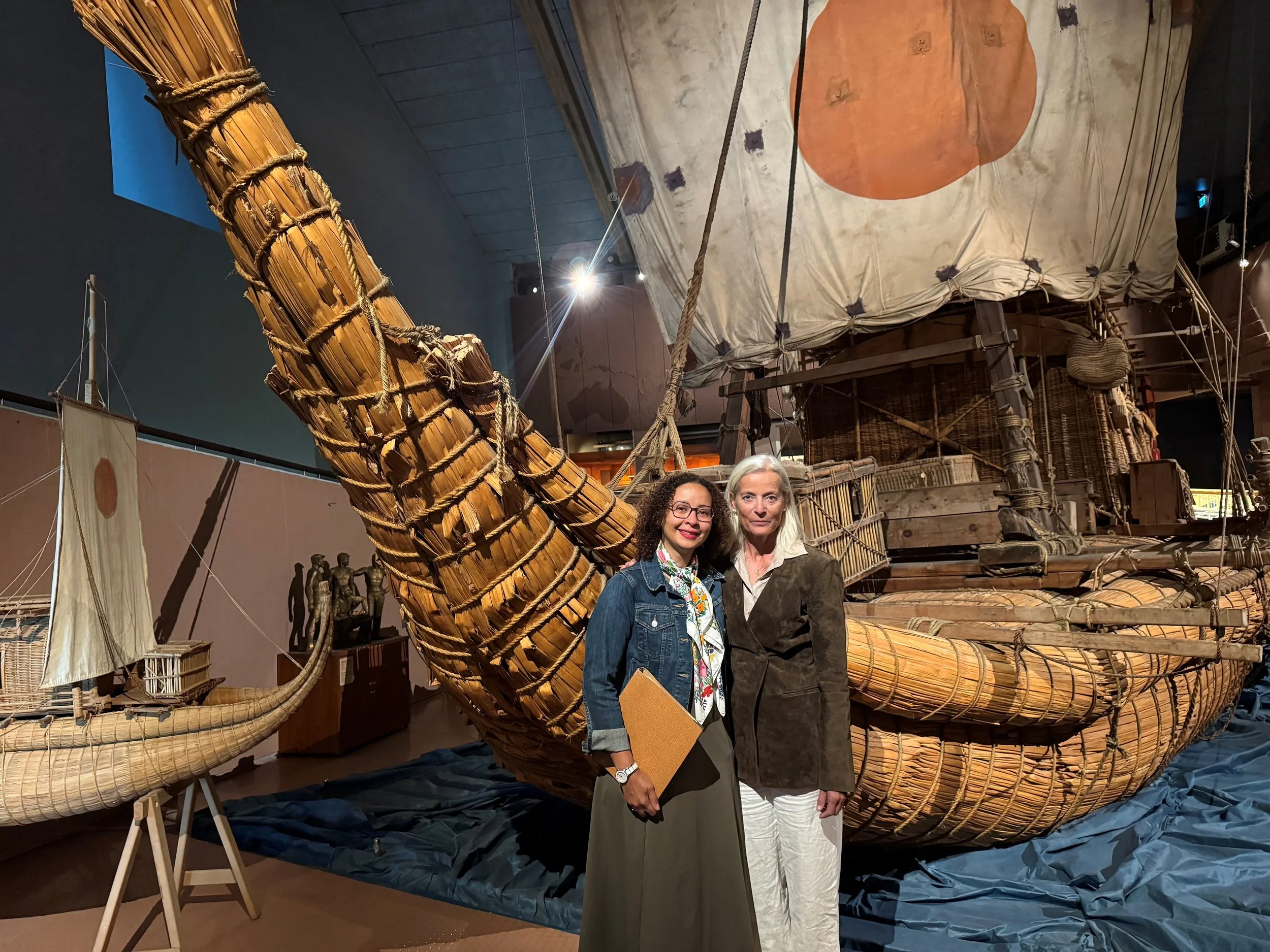
Mouna Ait Ouhanni with the diary of her father together with Museum Director Liv Heyerdahl.
Now the diary was to remain at the museum.
For Mouna, who was visiting Oslo with her French family, the handover marked an emotional conclusion to a long journey. As the diary was placed between the two women, several of those gathered around them were moved to tears.
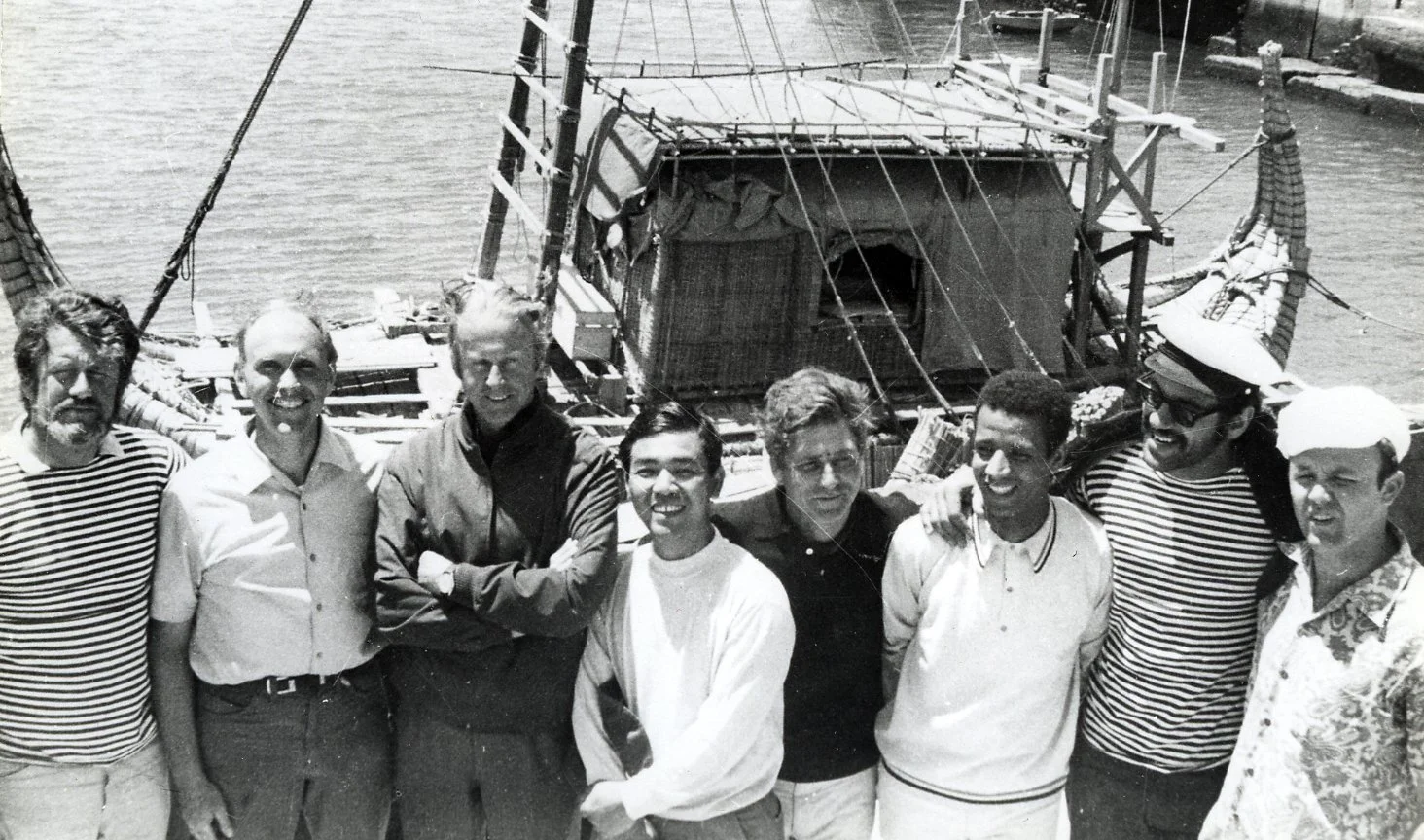
Mounas’ father, Madani Ait Ouhanni, was a crew member on the RA II expedition across the Atlantic in 1970. Here, he is third from the right.
Madani Ait Ouhanni died on October 13, 2024, at the age of 85. At the time, he was the last surviving member of the Ra II expedition. Shortly before his death, he had completed work on his memoirs. The book, Sur les traces de mon destin: À la volonté humaine rien d'impossible — roughly translated as In the Footsteps of My Destiny: Nothing Is Impossible to Human Will — is currently available only in French.
The story of how Ait Ouhanni came to find himself aboard Ra II could hardly have been written better as an adventure.
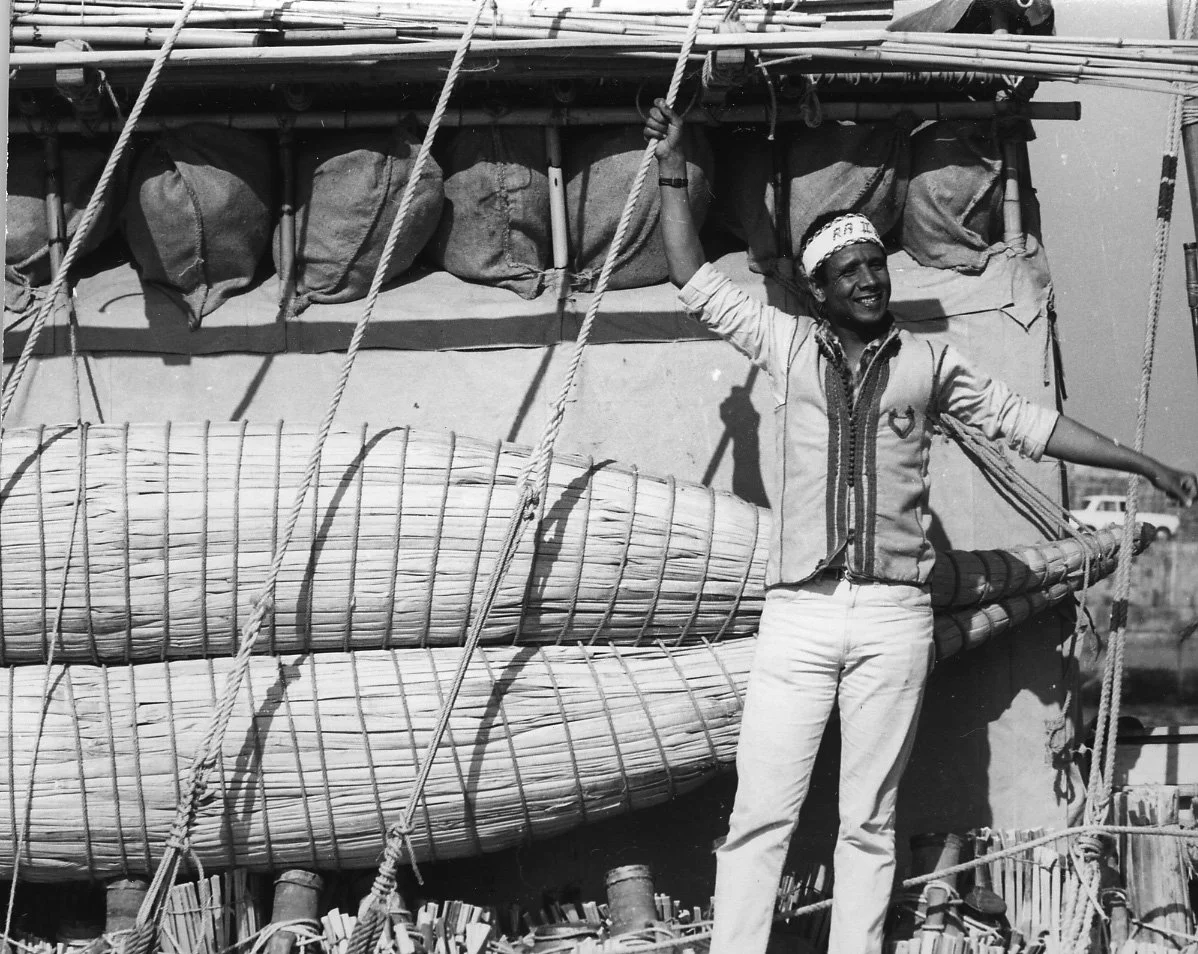
He was a Berber from Marrakesh, had played handball at the national-team level, and had worked in the hotel industry and in business. He already knew Heyerdahl and several members of the expedition from Safi, where the first Ra expedition had set out in 1969. But the thought that he himself might one day cross the Atlantic on a papyrus boat had probably never occurred to him.
When Abdullah Djibrine of Chad withdrew from the second expedition because he did not want to leave his newborn daughter, a place suddenly opened up. Ait Ouhanni felt strongly that Morocco, the host country, should be represented, and Heyerdahl had already decided that the courteous, soft-spoken man from the hotel should join them. An arrangement had been made with the hotel owners and Madani’s employer before Madani himself was even asked. He later jokingly referred to the episode as a “kidnapping.”
He was around 30 years old. He had never been to sea. He could not swim.
Still, he said yes.
On May 17, 1970, Ra II left Safi with eight men from eight nations aboard. After 57 days and roughly 3,800 miles, the reed boat reached Barbados. Ait Ouhanni himself saw his decision to take part as an opportunity to write Morocco’s name into history.
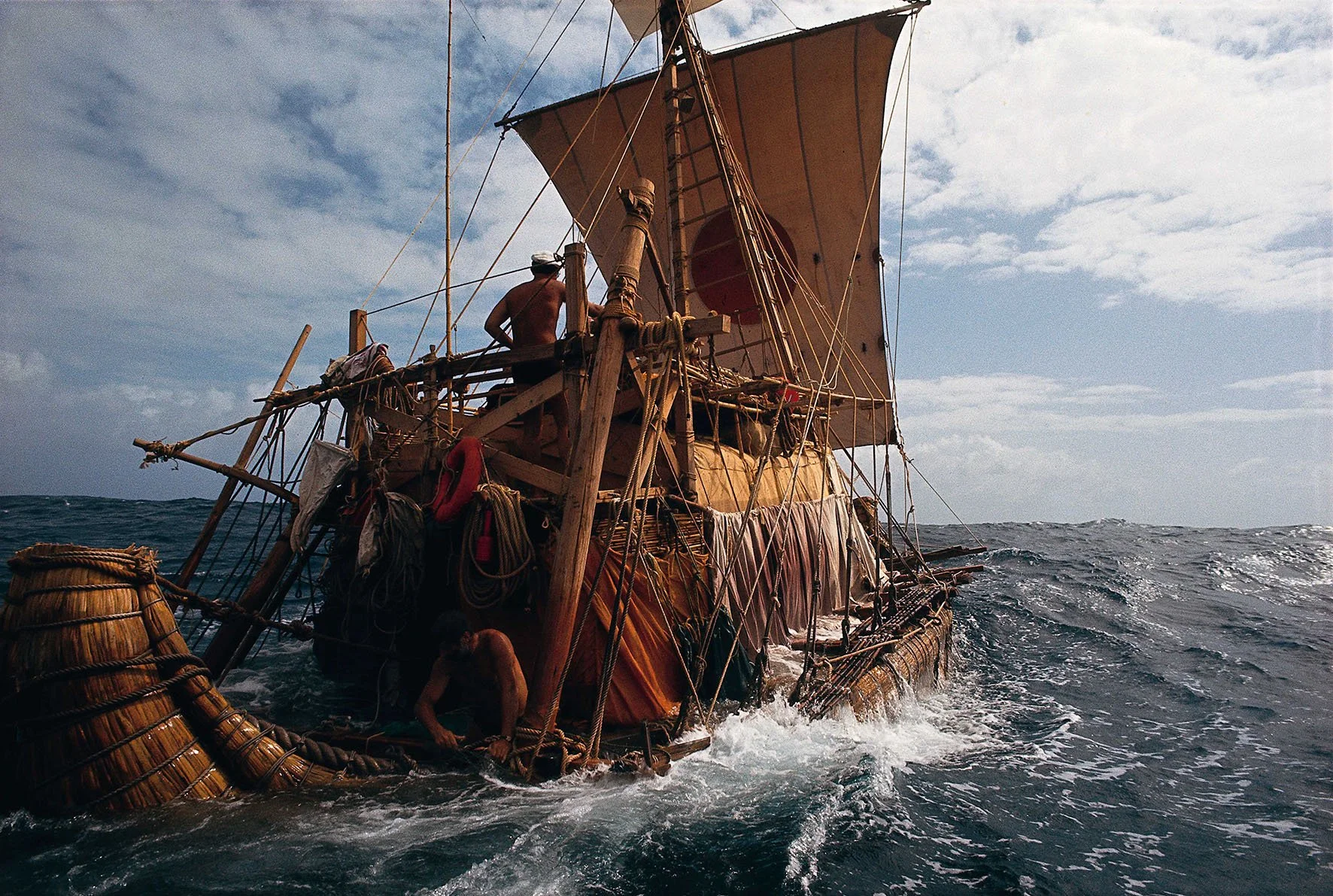
But Ra II was more than an experiment in prehistoric seafaring. The expedition also became an early and striking record of pollution in the world’s oceans.
During the first Ra voyage, the crew had seen oil floating on the surface far out in the Atlantic. Before the Ra II expedition, United Nations Secretary-General U Thant asked the crew to make systematic observations along the way. The findings were disturbing: solid lumps of oil were observed at sea on 43 of the voyage’s 57 days.
Madani was given responsibility for monitoring pollution on the ocean surface and collecting samples. He later also prepared a report on the work. In this way, the man who had joined the expedition almost by chance became part of an environmental effort whose significance reached far beyond the voyage itself. He later told the Moroccan press that monitoring marine pollution had been his specific responsibility aboard the boat.
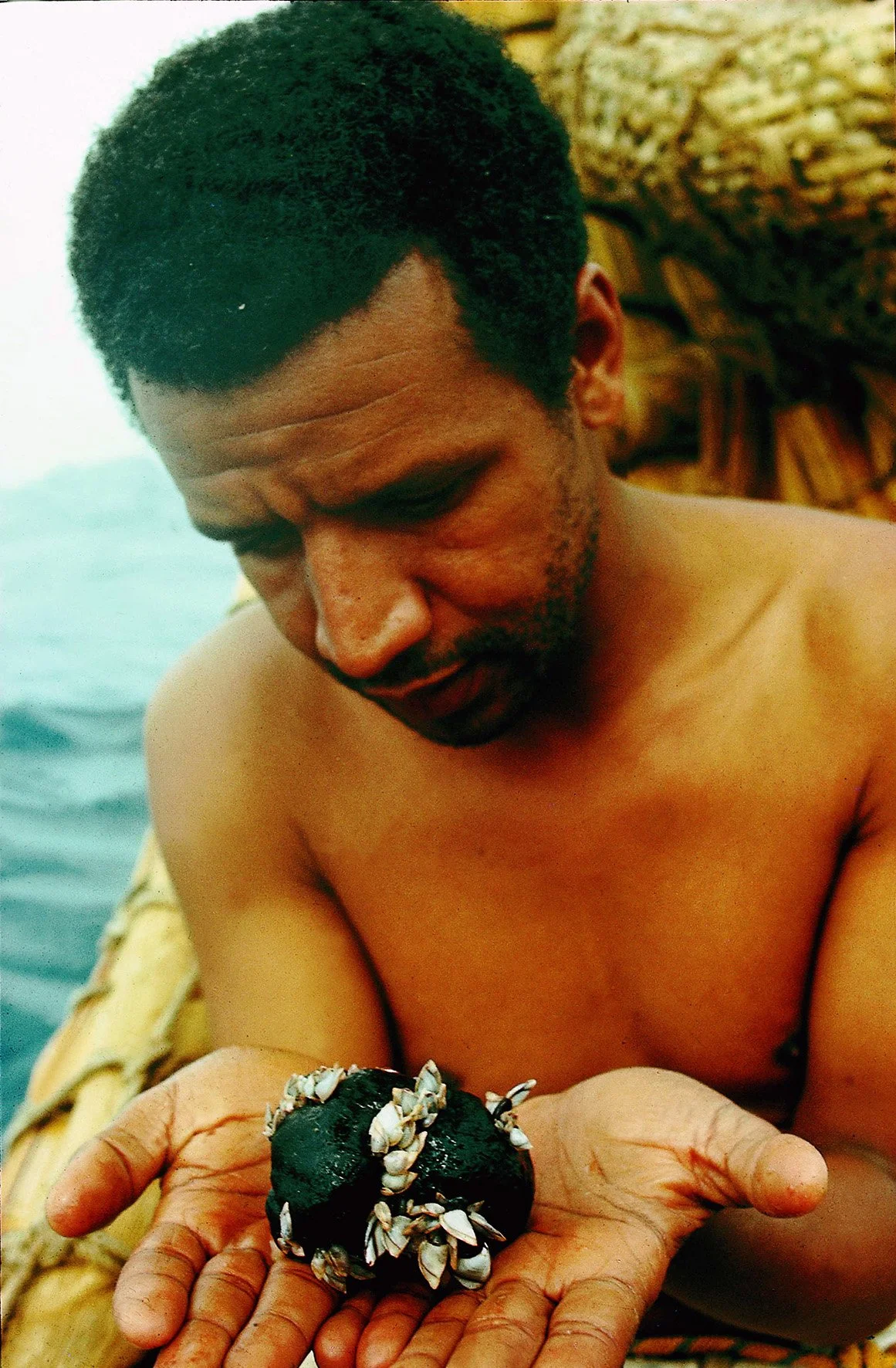
Madani was responsible for collecting data during the Ra expedition to monitor pollution on the ocean’s surface. The report had enormous implications for understanding human-caused pollution of the oceans.
At the same time, the diary reveals the man behind the expedition story.
Madani wrote in French, one of his two native languages. Yet English words and expressions already begin to appear on the first few pages. He learned them from the others aboard — a Russian, an American, an Italian, a Japanese, an Egyptian, a Mexican, and, of course, a Norwegian. On a small reed boat, they had to find a common language, quite literally.
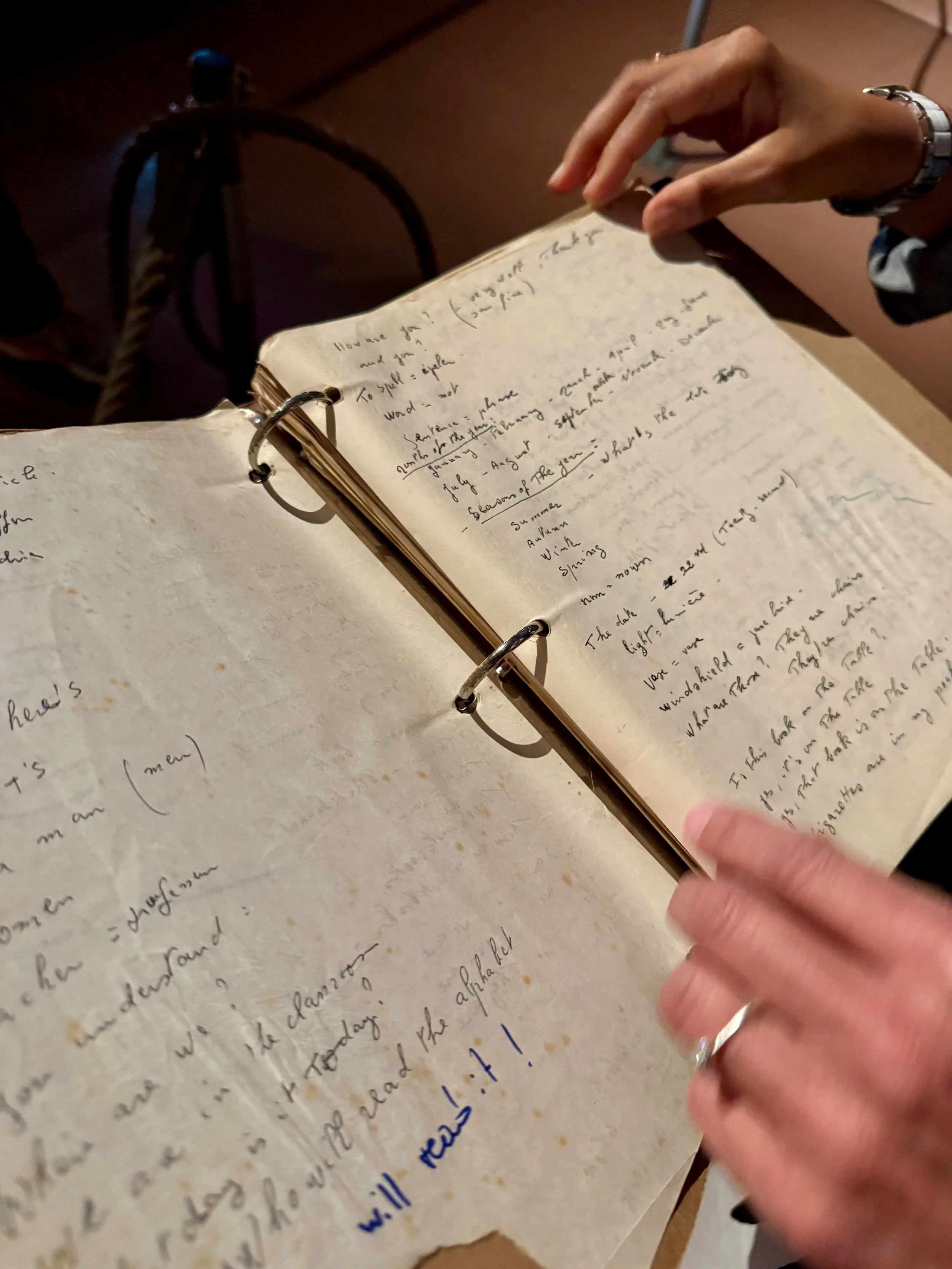
During the first few days, Madani was seasick. The Soviet physician Yuri Senkevich fried eggs for breakfast and tried to get some protein into the crew before conditions at sea grew worse. Madani cautiously picked at his food.
He was afraid of getting sick. And, like Heyerdahl, he could not swim.
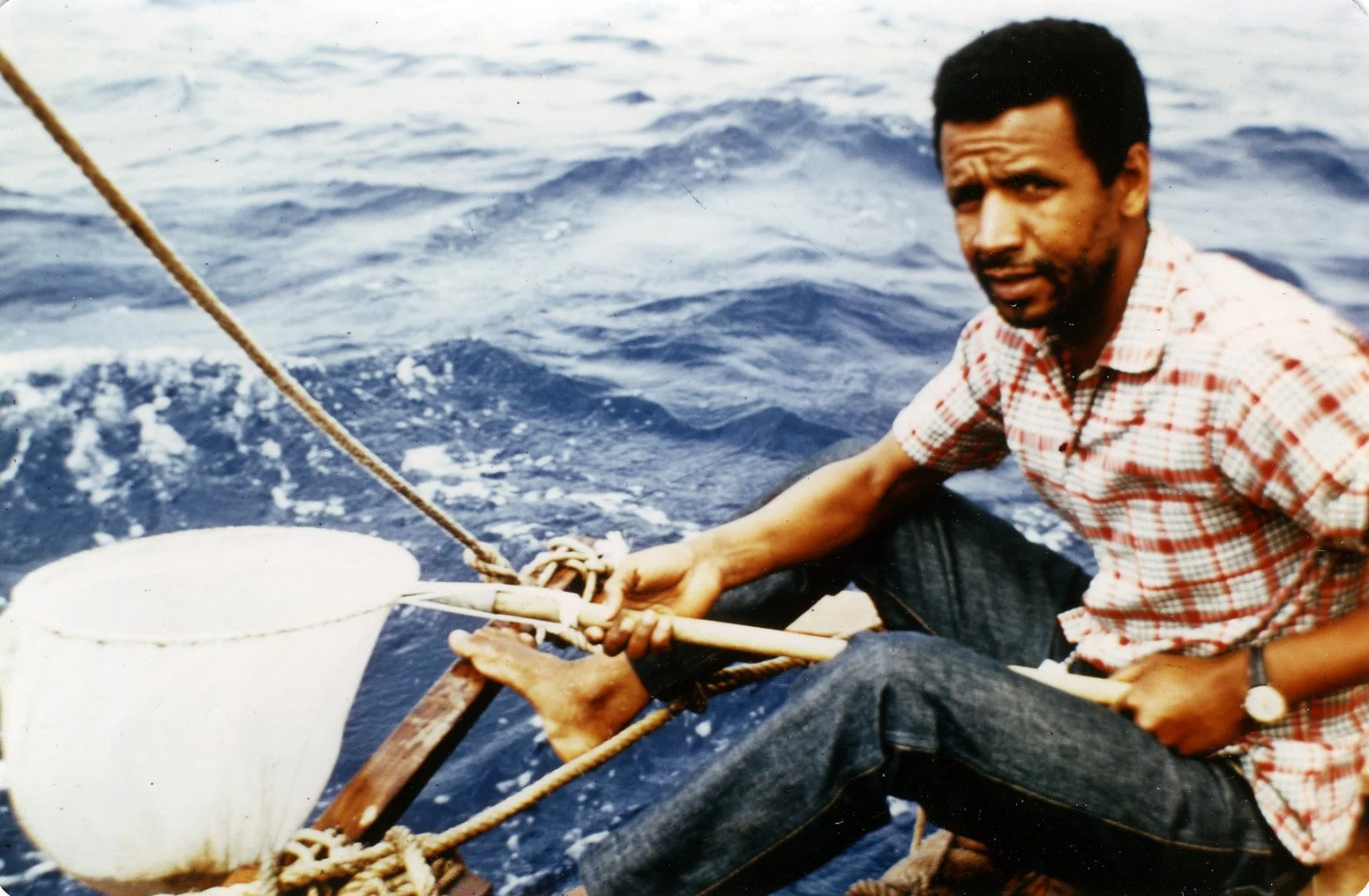
Later, we find him sitting outside the cabin on Ra II in a heavy Moroccan djellaba, watching the rest of the crew with his characteristic smile. The night before, six members of the crew had celebrated reaching the halfway point across the Atlantic with two bottles of red wine and a bottle of cognac. The next morning, they were not quite as quick on their feet as they had been before. The non-drinking Moroccan listened to their explanations with evident amusement.
It is small moments like these that make a diary invaluable. We know the great expeditions through books, films, photographs, and newspaper headlines. Diaries tell us something different: what people were thinking while history had not yet become history.
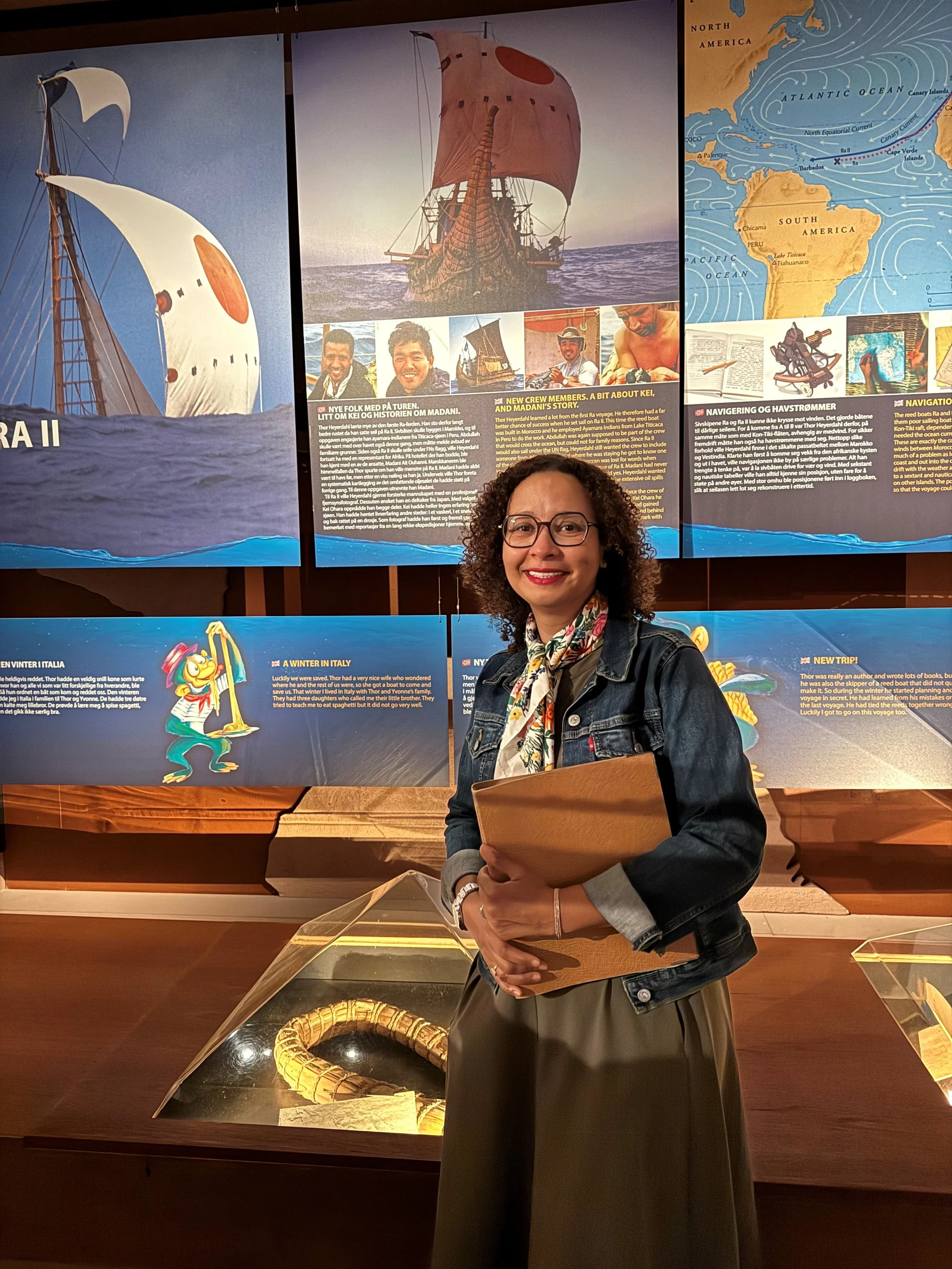
Madani Ait Ouhanni’s diary has now been digitized and preserved at the Kon-Tiki Museum, where it is available to researchers. And only a few yards away still stands the boat on which he wrote it.
Fifty-six years after Ra II left Morocco, the words of the young man from Marrakesh have also reached their final harbor.
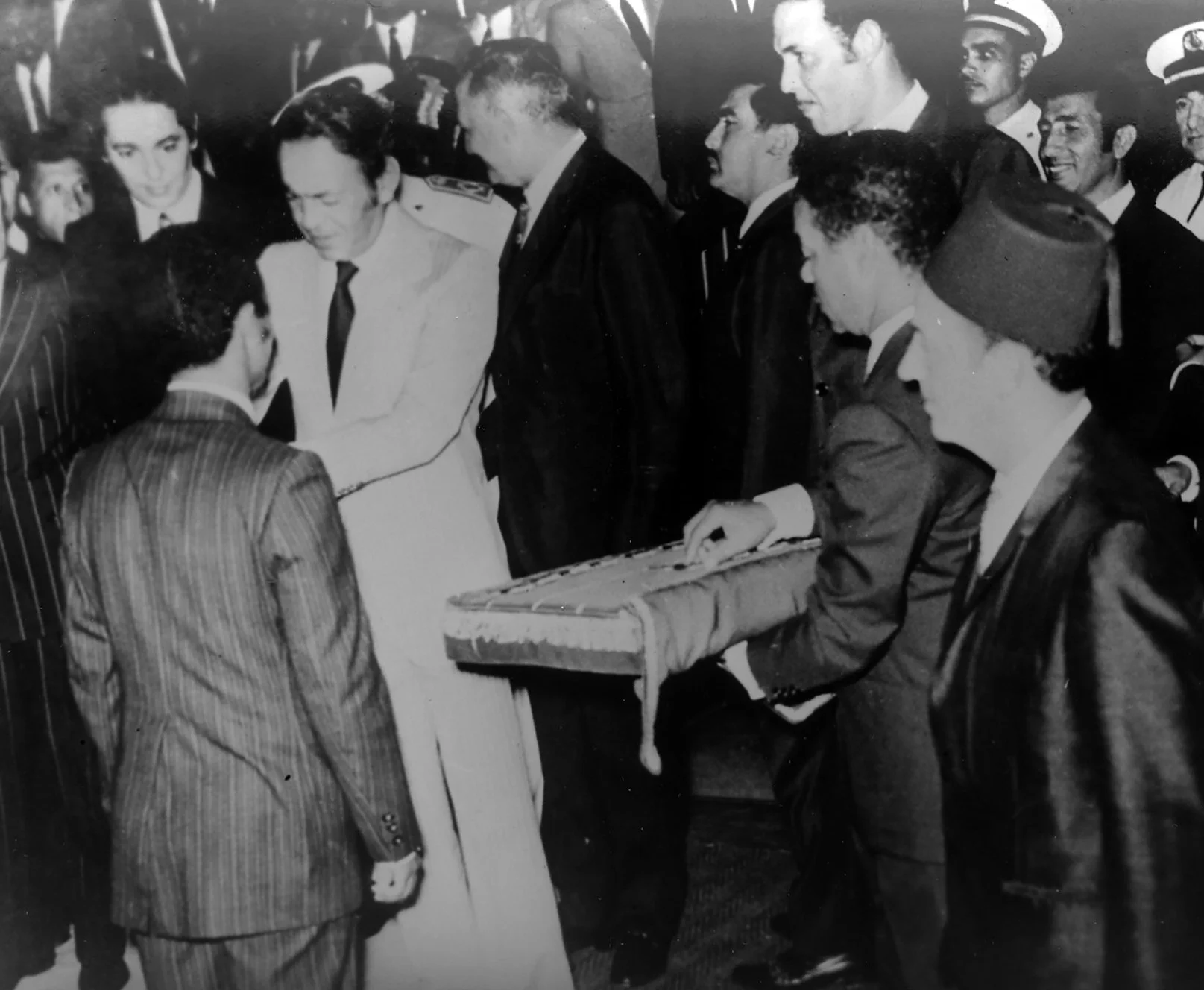
Madani Ait Ouhanni receiving an award from Hassan II of Morocco.